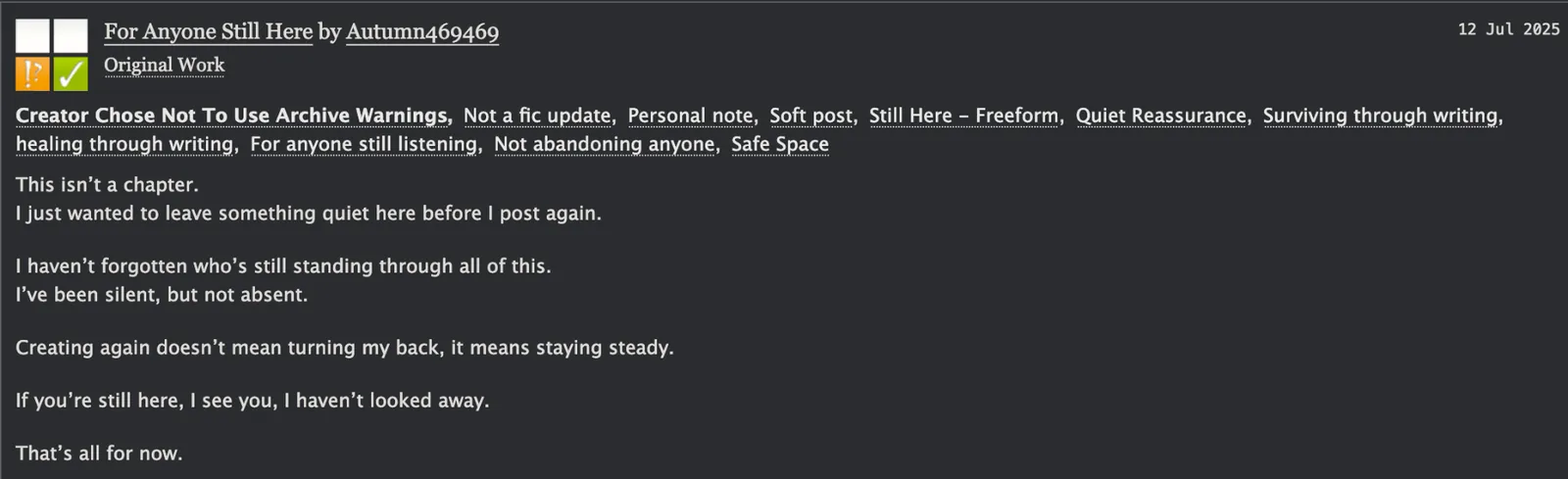
This piece is not a callout, but a clarification of authorship.
I’m aware that emotional themes such as “quiet strength,” “resistance through dependence,” or “female emotional logic” recur across fandom discourse. What I describe here is not the use of shared tropes, but the appropriation of a specific analytical structure I developed—one rooted in critique, not in affirmation.
I’m not claiming ownership over pain or over characters. I’m defending the shape and intention of a framework I created through months of writing, reflection, and sustained theoretical engagement. It is a framework meant to dissect Yukimura Chizuru’s psychological scaffolding, not to beautify or romanticize her dependence.
This essay is written from the perspective of someone whose work was not only adopted without credit, but repurposed into the very narrative it meant to resist. I believe that reinterpretation is valid—when it is honest. Silence, when paired with denial and aesthetic repackaging, becomes erasure.
I don’t seek apology. I seek recognition that ideas carry context, and that emotional logic, when stripped from its original speaker, can be used to overwrite the very voice it claimed to admire.
Lately, I’ve been reflecting on something unsettling: watching someone quietly adopt my theoretical framework on Yukimura Chizuru, present it in a softened, romanticized form, and then dismiss me—the original writer—for being “too loud” in defending my work.
In my recent meta “On Yukimura’s Emotional Logic: Loyalty and Dependence,” I laid out a detailed exploration of Chizuru’s emotional structure. I argued that her dependency is not a sign of immaturity, but a psychological mechanism shaped by historical, social, and internal forces, and that this very dependency offers fertile ground for fan creators to reimagine her growth into autonomy. She is not “just a tool,” but neither is she a ready-made heroine of resistance. Her emotional simplicity and reliance on Hijikata/Shinsengumi are not virtues in themselves, but starting points for transformation.
That distinction matters.
Yet today, I saw someone repurpose this framework—almost point by point—to offer a defense of the canon portrayal of Chizuru as inherently strong because she “survives quietly” and “resists through softness.” She describes Chizuru as a symbol of “quiet rebellion,” as someone who finds her own way even when it costs her. These sound noble on the surface, but that’s not the structure I built.
My work was not a love letter. It was a critique.
I wrote about:
The tension between dependence and identity
The historical lack of female self-actualization
The danger of emotional tool-ization
The need to imagine Chizuru as more than a support mechanism for male growth
None of this was meant to excuse or romanticize canon. It was about excavating the psychological scaffolding that traps her, so we can understand why she clings to Hijikata, and how future versions of her might break free.
And yet… that scaffolding was quietly lifted from my writing, stripped of its critical spine, then repackaged as emotional admiration—with no credit, no link, no acknowledgement. Worse still, the writer turned around and mocked those who fight for credit as being “too loud.”
To make it more ironic:
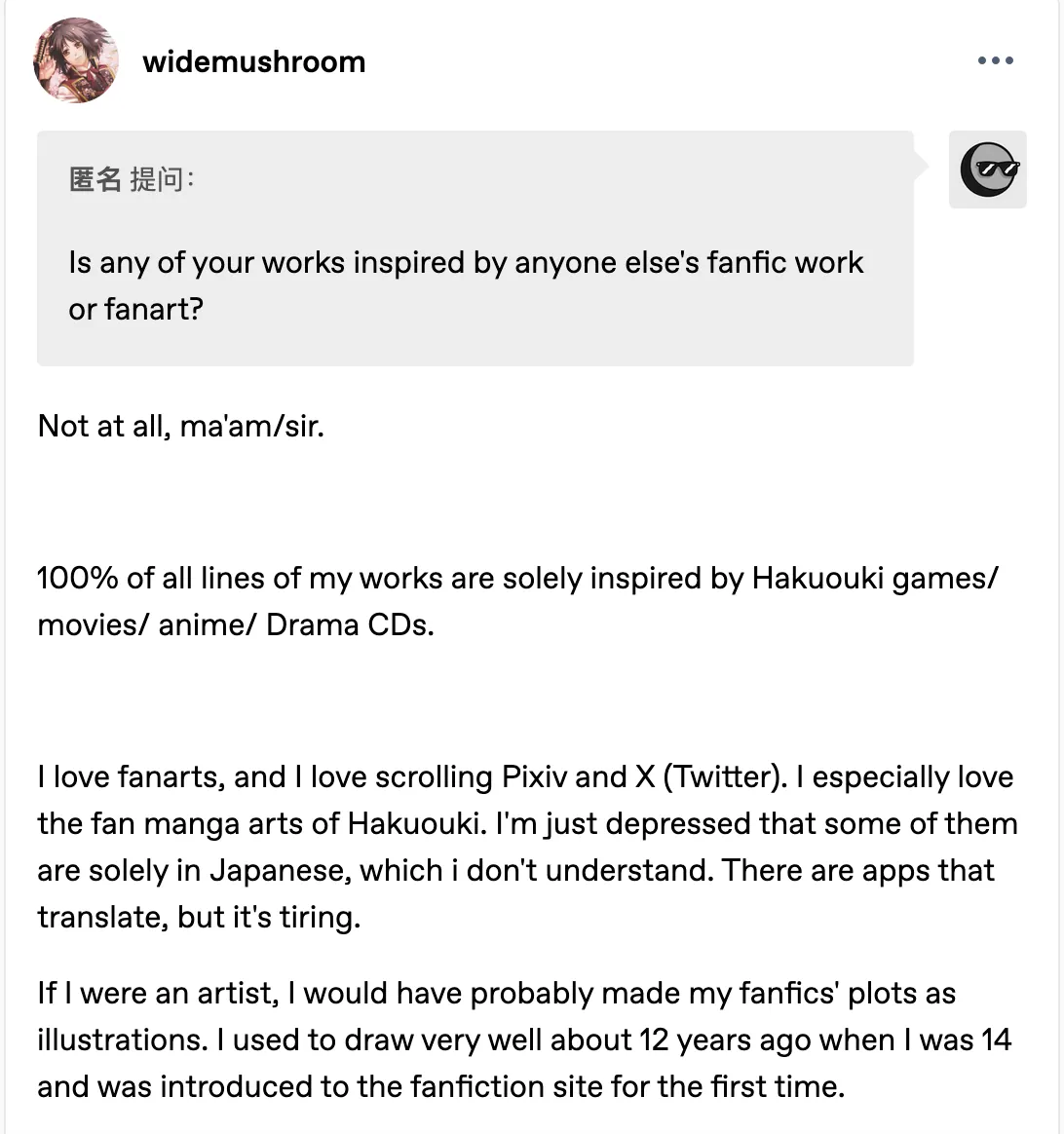
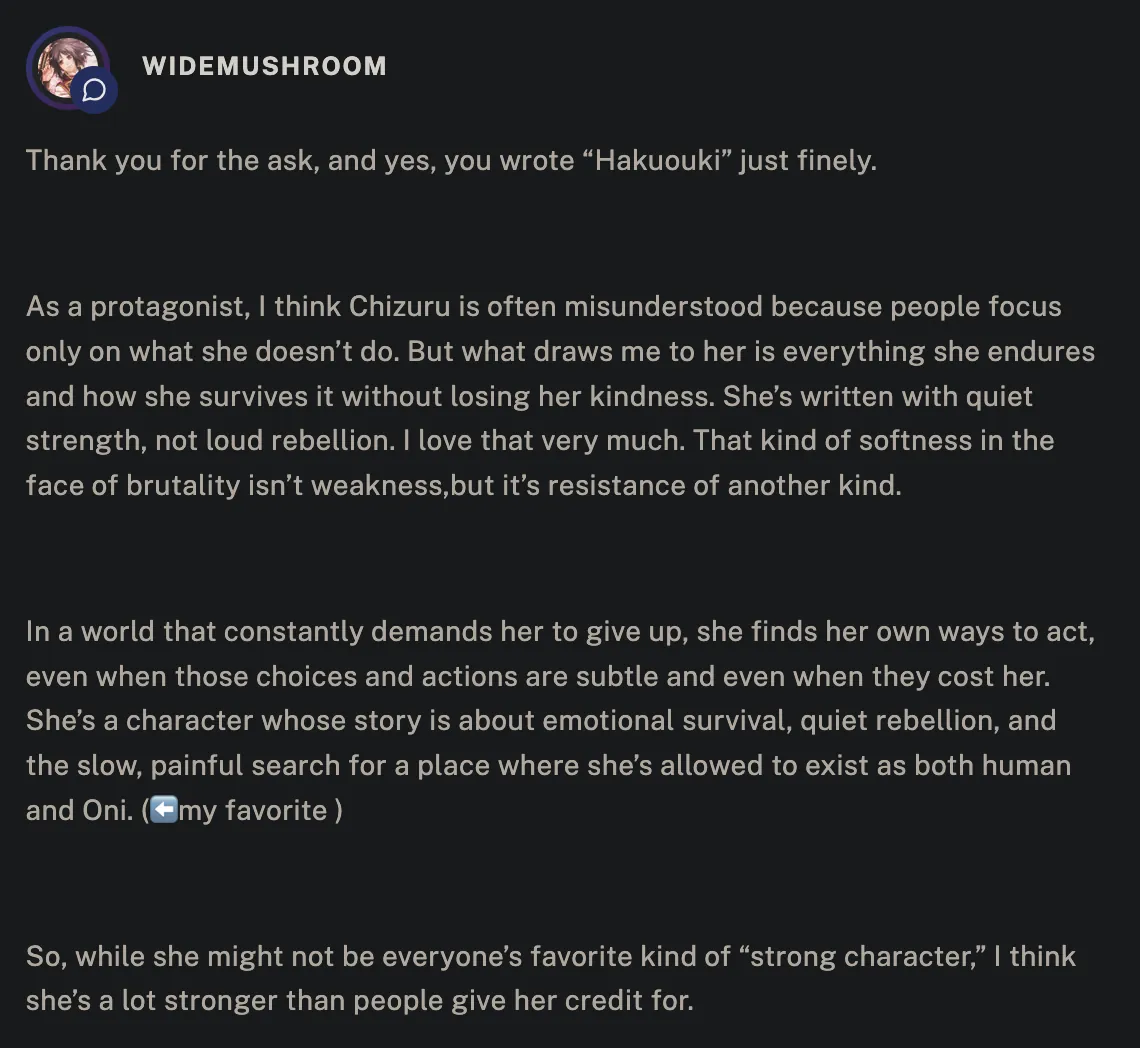
👉 In a public post dated May 23rd (image attached), when asked if her writing was inspired by anyone else’s fanwork or meta, she responded:
“Not at all, ma’am/sir. 100% of all lines of my works are solely inspired by Hakuouki games/ movies/ anime/ Drama CDs.”
Figure 1
This wasn’t just a denial. It was a public erasure. A refusal to acknowledge any intellectual influence—even when the parallels are undeniable.
If you borrow someone’s language, someone’s scaffolding, someone’s ideas—you don’t get to erase their name and claim the soft, moral high ground. You don’t get to act like you’re the rational one while appropriating the intellectual labor of someone you refuse to acknowledge.
I didn’t write “Yukimura is strong.”
I wrote: She is made to depend. And that dependence might be the place where her transformation begins. That’s not the same.
I welcome critique. I welcome discussion. But what I do not accept is silence dressed as civility, erasure masked as reinterpretation.
We’re all writing from somewhere. I write from grief, from disenchantment, from years of watching female characters hollowed out to serve other people’s journeys. I don’t have the privilege to be quiet. And I will not let my voice be overwritten just because someone else finds a prettier way to repackage it.
You don’t get to misread me on purpose and walk away with my bones.
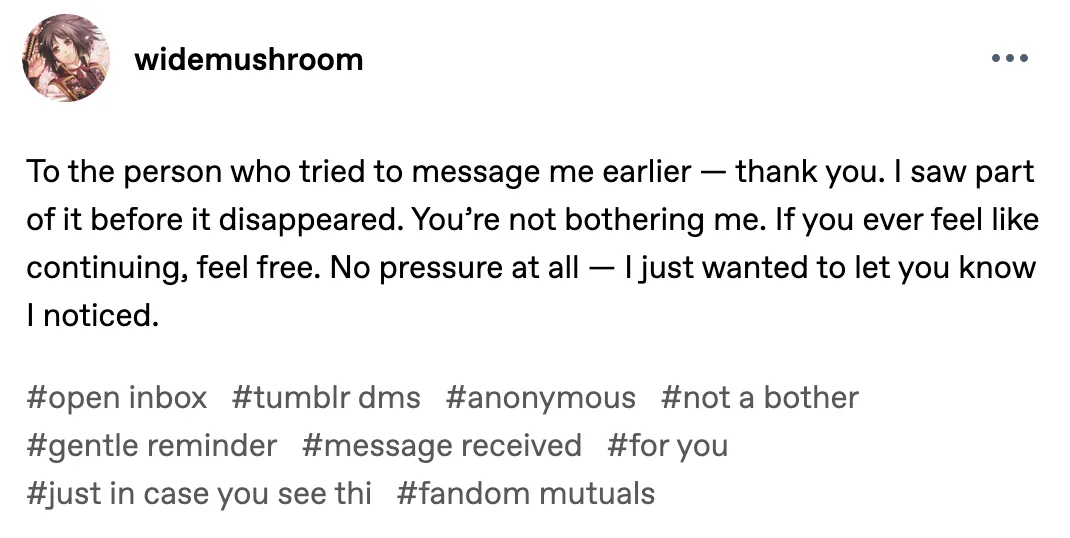
You don’t get to say “my inbox is open” when you’ve already blocked the person you borrowed from. That’s not an invitation to discuss—it’s an act of silencing, hidden under the mask of civility.
Figure 2
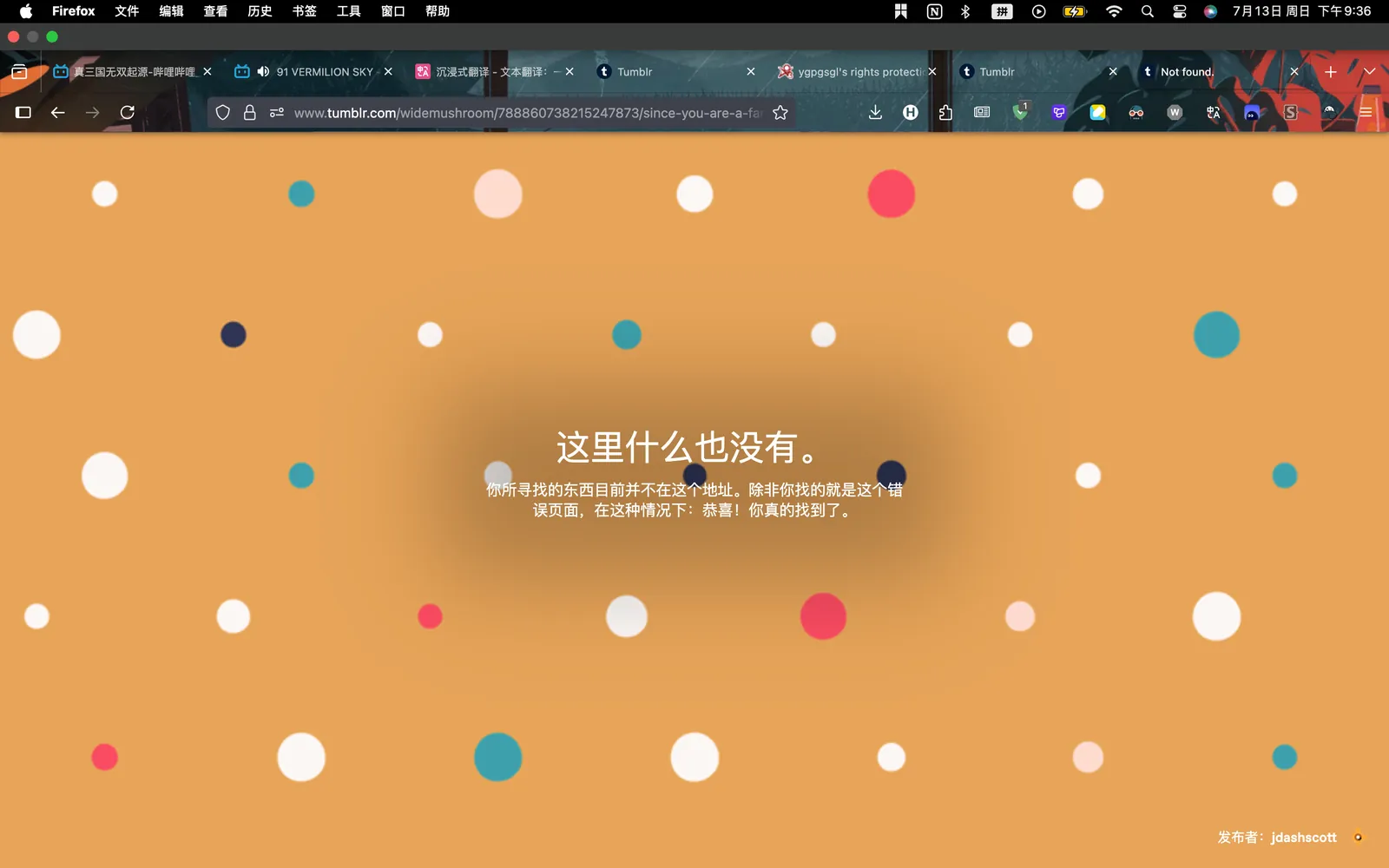
As of now, when I click on her Tumblr homepage, it automatically redirects to a 404 page, indicating that I am still blocked
Figure 3
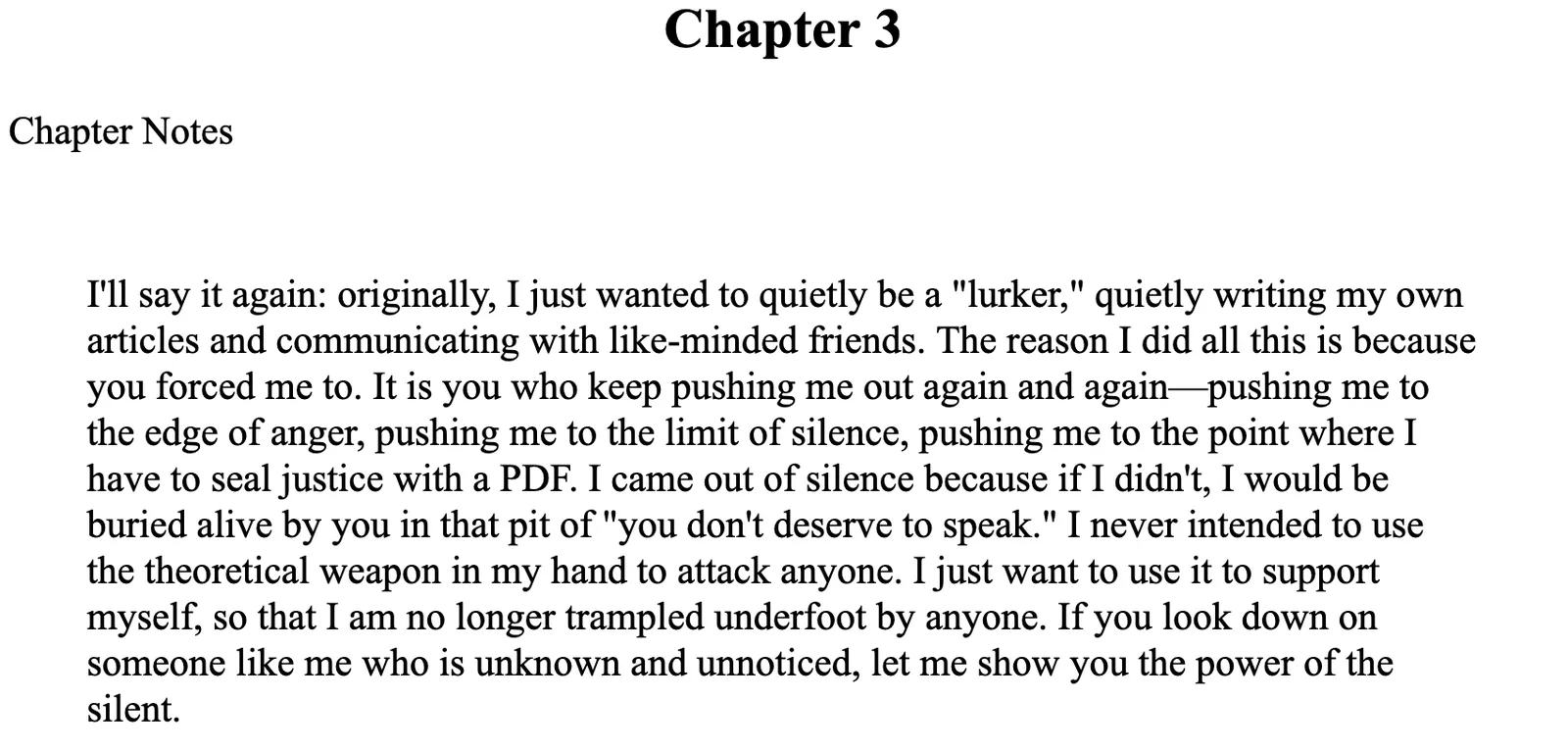
To add: her phrase “the silent ones also have power of rebillion” was also drawn from my writing. It’s painfully awkward — she rarely offers genuine insight into the characters she writes, and when she does attempt to sound reflective, her rhetoric consists almost entirely of appropriated material.
Figure 4Figure 5Figure 6
In the above two images, autumn reused the expressive structure I established—"silence → awakening → resilience"—and translated this structure into her analysis of the character Chizuru. Although there is no word-for-word plagiarism between the two, this constitutes “plagiarism through the application of emotional logic and thought structure,” which is a very typical case of “subtextual imitation.” Furthermore, the source was not cited, constituting academic dishonesty.
This is the last bone I use to fight stigma and reclaim my own voice. This sentence is built on my real confrontation with the world, my struggle on the edge of silence and collapse, and it is the sharp thorn I raised to avoid being crushed. Yet she stole the way this sentence is expressed, its rhythm, and its meaning, then attached it to a character like Yukimura Chizuru, who is “weak but endowed with the virtue of resilience.”
She said she was a medical student, but she had never studied citation ethics. She learned that “silence is golden,” but never mastered that “stealing words is shameful.” What she dissected was not characters, but the linguistic corpses left behind by others. She said, “Silent people also have power,” yet she dared not admit that the sentence she used was written by me during dozens of moments when I considered deleting my account. If she were truly academically trained, she would know: “If you haven’t walked that path, don’t turn others’ blood into your confession.” But she is not one of the silent. She is a tailor who packages silence as nobility.
Since @ladyyomiart continues to pretend she never saw this, I will be reposting this thread.
I openly invite ladyyomi and her friends to read it carefully and respond—
let’s clarify, once and for all, who autumn actually plagiarized.
The evidence shows that autumn did not copy saltyneo.
She copied me—YGP. And silence won’t erase that.
I already clarified I’m not Autumn.
I’ve said it, documented it, archived it.
If platforms still won’t act, it’s their failure.